Skip to content




Why choose corn starch-based?
- Environmental friendliness: Corn starch plastic sheets can be decomposed by microorganisms in the natural environment and ultimately converted into carbon dioxide and water, with minimal environmental impact.
- Renewable resources: Its main raw material corn is a renewable resource that reduces dependence on traditional petroleum based plastics and helps alleviate resource shortages.
- Good mechanical and physical properties: Corn starch plastic sheet is suitable for various processing methods, with good transparency and gloss, as well as gas and water resistance, making it suitable for packaging materials.
- Biocompatibility: Polylactic acid (PLA) is one of the main components of corn starch plastic sheets, which has good biocompatibility and can be used in the pharmaceutical field, such as making disposable infusion equipment, surgical sutures, etc.
5.Environmental friendliness: Corn starch plastic sheets can be decomposed by microorganisms in the natural environment and ultimately converted into carbon dioxide and water, with minimal environmental impact.
6.Renewable resources: Its main raw material corn is a renewable resource that reduces dependence on traditional petroleum based plastics and helps alleviate resource shortages.
- Good mechanical and physical properties: Corn starch plastic sheet is suitable for various processing methods, with good transparency and gloss, as well as gas and water resistance, making it suitable for packaging materials.
8.Biocompatibility: Polylactic acid (PLA) is one of the main components of corn starch plastic sheets, which has good biocompatibility and can be used in the pharmaceutical field, such as making disposable infusion equipment, surgical sutures, etc.
What it can be used to make ?
- Food packaging: Corn starch plastic sheets can be used to make food packaging boxes, trays, etc., suitable for hard packaging of fruits, vegetables, eggs, cooked food, baked goods, as well as packaging of sandwiches, cookies, flowers and other goods.
- Environmentally friendly shopping bags: Fully biodegradable plastic shopping bags produced from corn starch have the characteristics of high temperature resistance, stretch resistance, and short degradation time in composting. The degradation products are carbon dioxide and water, which are harmless to the environment.
- Degradable tableware: Corn starch plastic sheets can be made into various degradable tableware, such as cups, plates, bowls, dishes, etc. These tableware can be degraded into fertilizers with low carbon emissions when burned.
- Express buffer packaging materials: corn starch can be used to produce full starch, biodegradable environmental protection buffer packaging materials, which is suitable for the express industry, reducing the use of petroleum based plastic foam, and reducing the burden of environmental protection.
- Drug capsules: Corn starch can replace traditional plastics and be used to make drug capsules at a lower cost and safely.
- Environmentally friendly water retaining and slow-release fertilizer wrapping: Corn starch plastic sheet can also be used in agriculture to produce environmentally friendly water retaining and slow-release fertilizer wrapping, reducing the pollution of fertilizers to the environment.
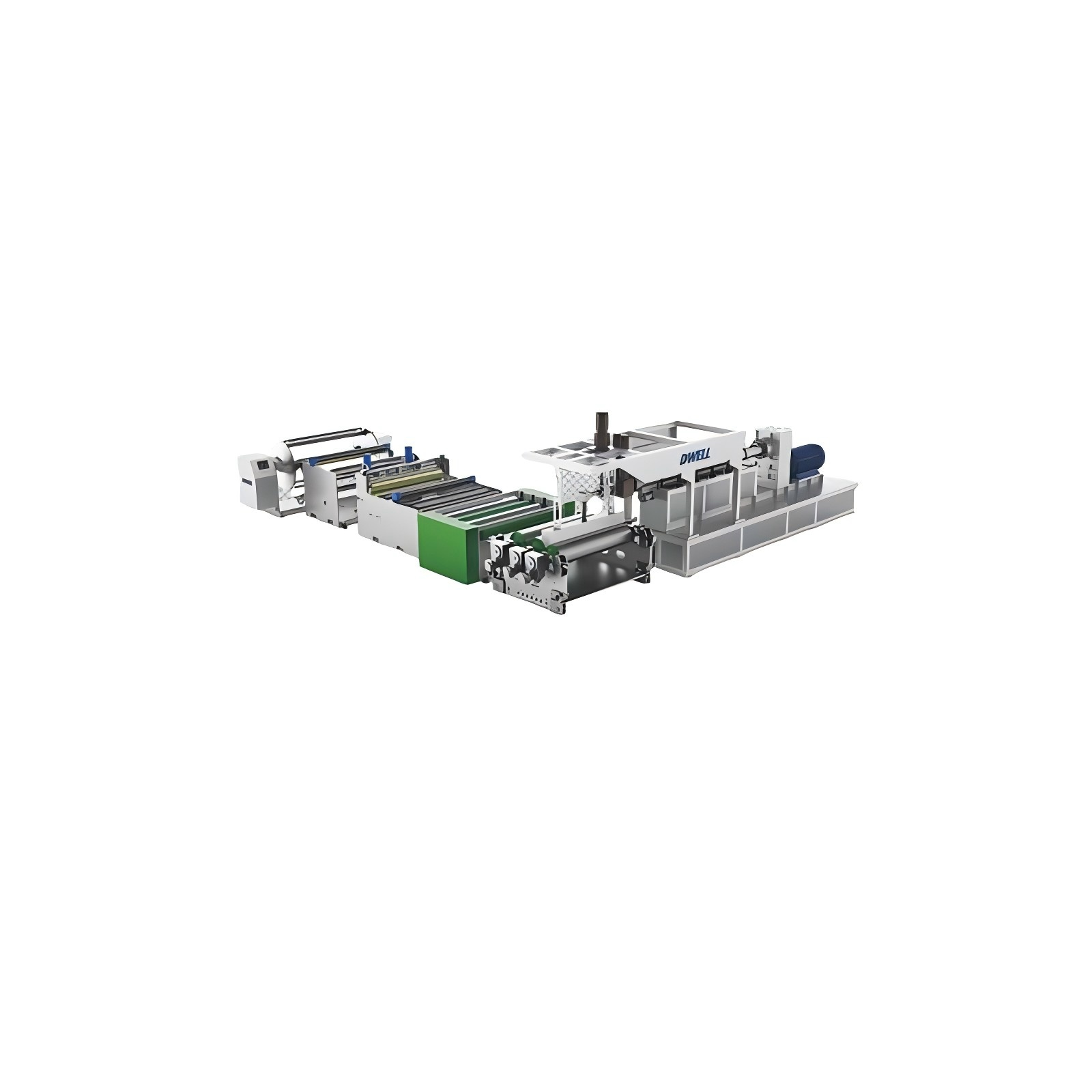
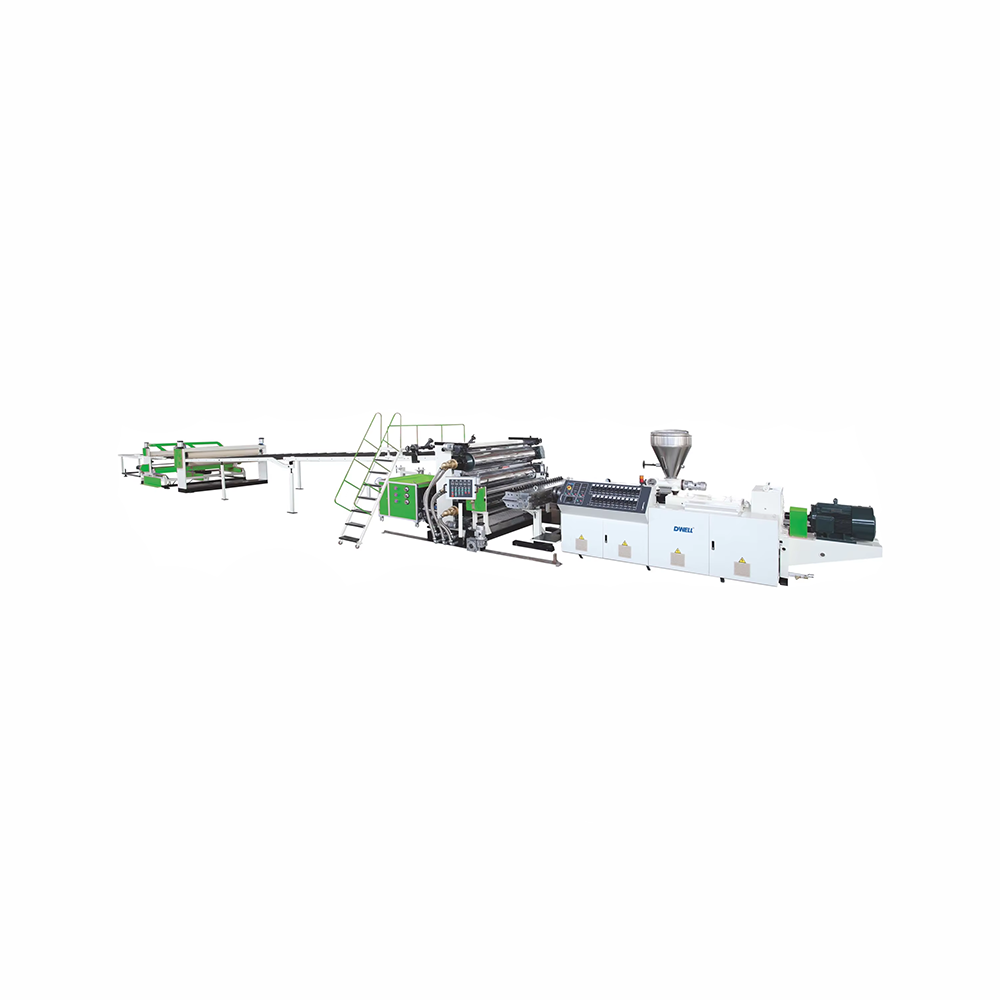
Equipment components
Twin screw extruder: controlled by PLC, suitable for processing biodegradable masterbatch such as PBAT and PLA, with a production capacity of 200-350 kg/hour.
Spiral conveyor: Wrap heating wires around the outer surface of the shell to evenly heat and dry the corn starch substrate, solving the problem of dryness.
Three roll calendering machine: improves the surface glossiness of the sheet.
Waste edge cutting and winding machine: Cut and roll the waste materials at the edges and corners of the sheet.
Drying machine: Drying the sheets.
Tractor: Transports the sheet along the production line.
Winder: Winders formed sheets.
Double machine series extruder foaming molding process: used in the production line of PLA corn starch fully degradable plastic lunch boxes to ensure foaming quality.
Constant temperature oil mold temperature control system: controls the temperature of the host, reduces the scrap rate during startup, and maintains stable production.
Electrical control system: equipped with explosion-proof motor, variable frequency speed control, energy-saving and stable, temperature control system realizes PID intelligent digital display control.
Hydraulic screen changing system: achieve non-stop screen changing and reduce production costs.
Plastic extrusion and injection molding
| Plastic extrusion | injection molding | |
| Production efficiency | Continuous process, high output, suitable for large-scale production | Shorter cycle, suitable for small batch and complex shape production |
| Product shape | Suitable for producing 2D products | Suitable for producing 3D products |
| Material Applicability | Suitable for thermoplastic materials | Suitable for thermoplastic and thermosetting plastics |
| production costs | Low | High |
plastic extrusion: what is it? how does it work?
The extrusion method of a plastic extruder generally refers to melting plastic at a high temperature of around 200 degrees, and the melted plastic is then formed into the desired shape when passing through a mold. Extrusion molding requires a deep understanding of plastic properties and rich experience in mold design, and is a molding method with high technical requirements.
1.Plastic extrusion first sends plastic particles or powder into a heating bucket.Then, the barrel gradually melts and compresses the material through the rotating screw. Molten plastic is forced through molding molds.
Next, the cooling system immediately solidifies them into a continuous contour. 2.Then, the traction device pulls away the extruded plastic to maintain consistency in shape and size. Depending on the purpose, the product can be cut into the desired length or rolled into a roll.
- Finally, some extruded products may require additional processes such as printing or punching. Plastic extrusion first sends plastic particles or powder into a heating bucket. Then, the barrel gradually melts and compresses the material through the rotating screw. Molten plastic is forced through molding molds. Next, the cooling system immediately solidifies them into a continuous contour. The traction device pulls away the extruded plastic to maintain consistency in shape and size.
- Depending on the purpose, the product can be cut into the desired length or rolled into a roll. Finally, some extruded products may require additional processes such as printing or punching.
1.Market trends
Intelligence and automation: With the rise of labor costs in factories, intelligence and automation have become important trends in the plastic extruder industry. Intelligent plastic extrusion products can be systematically managed through the Internet of Things, improving production efficiency and product quality.
Environmental protection and energy conservation: The continuous rise in raw material and energy costs has promoted the development of environmental protection and energy conservation technologies. Plastic extruder manufacturers are committed to developing various energy-saving solutions to meet customers’ demands for energy conservation and emission reduction.
Expansion of application fields: The application fields of plastic parts are constantly expanding, gradually extending from traditional industries such as automobiles, household appliances, packaging, etc. to aerospace, new energy, advanced manufacturing, and other fields.
The growing demand for recycled plastics: The global increase in environmental awareness has driven the development of the recycled plastics market. It is expected that by 2026, the global market for recycled plastics will reach $43.5 billion, with a compound annual growth rate of 9.3%.
2.Development prospects
Market demand continues to grow: Benefiting from the growth of downstream industries such as automobiles, home appliances, consumer electronics, etc., the demand for plastic products remains steadily increasing. As an important equipment for plastic processing, the market demand for plastic extruders will continue to increase.
Technological progress drives development: The continuous breakthroughs in new materials and technologies have propelled the advancement of plastic extruder technology. The future plastic extruders will be more efficient, intelligent, and environmentally friendly.
Investment risks and opportunities
3.Risk
Policy risk: The tightening of environmental policies in various countries may increase the operating costs of enterprises.
Market competition: Intense competition within the industry, technological upgrades, and shrinking export markets may affect a company’s profitability.
Fluctuations in raw material prices: Fluctuations in plastic raw material prices may affect a company’s cost control.
4.Opportunity
Environmental protection and energy-saving technology: Investing in environmental protection and energy-saving technology can meet market demand and enhance the competitiveness of enterprises.
Intelligent upgrade: Investment in intelligent and automated equipment can reduce labor costs and improve production efficiency.
Emerging markets: Applications in emerging fields such as aerospace and new energy provide new market opportunities for enterprises.
In summary, the international plastic extruder industry is in a stage of rapid development, with market demand continuing to grow and technological advancements driving industry growth. However, investing in this industry also faces certain risks, and companies need to carefully evaluate their investment decisions.