Skip to content
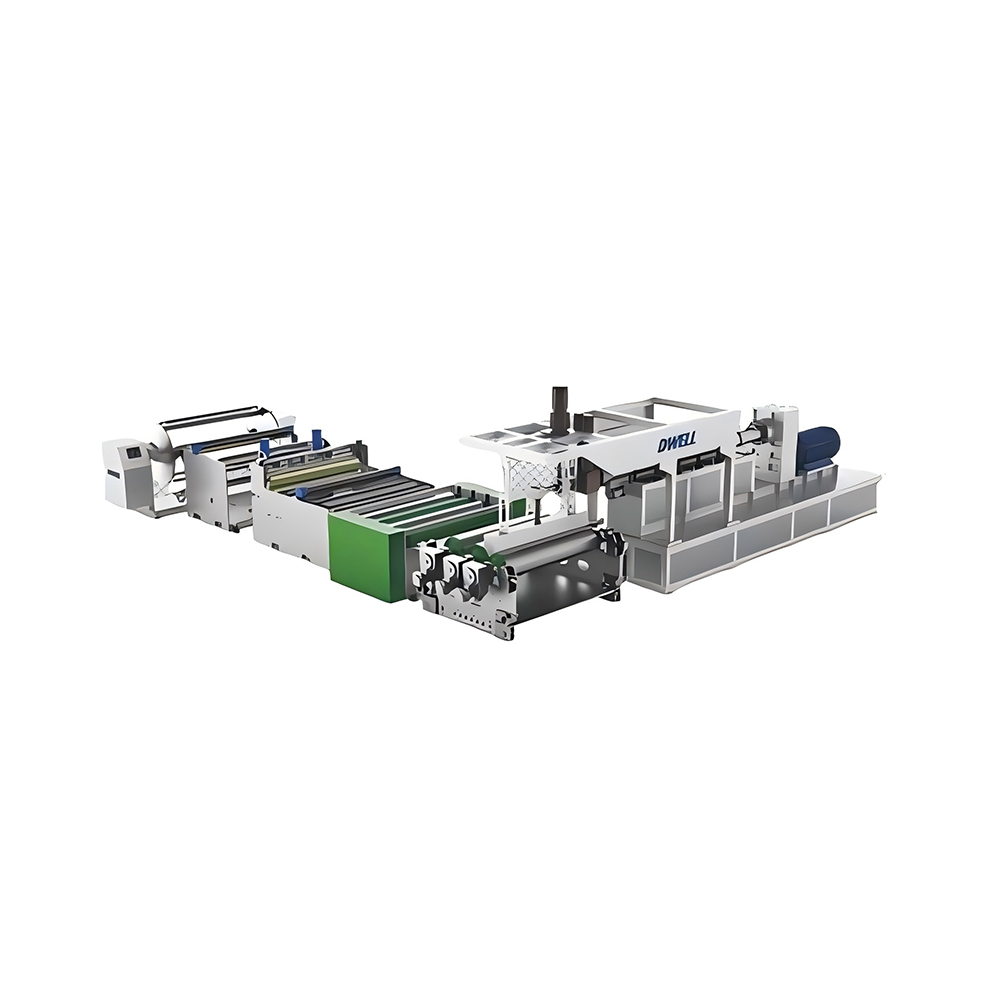
 Film extrusion lines are core equipment in the plastic processing industry, designed to produce high-quality plastic films through continuous extrusion, shaping, cooling, and winding processes. Widely used in packaging, agriculture, construction, and daily necessities sectors, these production lines integrate precision machinery, intelligent control, and material science to meet diverse film performance requirements.
The film extrusion process follows a continuous, automated workflow, with slight variations between cast film and blown film lines, but the core principle remains consistent:
As the “heart” of the production line, the extruder melts, mixes, and conveys plastic raw materials. It typically features a screw and barrel assembly, with heating zones (electric or oil heating) and cooling systems to control temperature precisely. For film production, single-screw extruders are commonly used for general-purpose plastics (PE, PP), while twin-screw extruders are preferred for modified materials or high-precision films, ensuring uniform melting and stable output.
The die head shapes the molten plastic into a continuous film. The most common types of film extrusion are flat die (for cast film) and circular die (for blown film). Flat dies produce films with uniform thickness and smooth surfaces, suitable for high-transparency applications; circular dies form tubular films, which can be slit into single-layer films or used as tubular products (e.g., plastic bags). The head design directly affects film width, thickness tolerance, and surface quality.
Rapid and uniform cooling is essential to fix the film’s structure and improve its mechanical properties. Cast film lines use cooling rollers, where the molten film adheres to the chilled roller surface for instant cooling. Blown film lines adopt air cooling (internal or external) to cool the tubular film before collapsing and flattening. The cooling temperature and speed are adjustable to adapt to different plastic materials and film specifications.
The haul-off unit pulls the cooled film at a stable speed, ensuring consistent thickness and preventing stretching or deformation. It is equipped with adjustable speed control and pressure rollers to maintain film flatness. The haul-off speed is synchronized with the extruder output and winding speed to achieve continuous, stable production.
This unit winds the finished film into rolls of specified length and diameter. Advanced winding systems feature automatic tension control, edge alignment, and roll changing functions, reducing manual intervention and ensuring neat, uniform rolls. For thin films or high-speed production, automatic winding machines are essential to avoid film wrinkles or breakage.
Modern film extrusion lines are equipped with PLC (Programmable Logic Controller) and touch-screen control systems, enabling precise adjustment of temperature, pressure, speed, thickness, and other parameters. Real-time monitoring and data recording functions help optimize production processes, reduce waste, and ensure consistent product quality.
Film extrusion lines produce a wide range of plastic films, each tailored to specific applications based on material, thickness, and performance. Common applications include:
This is the largest application sector for extruded films. Products include food packaging films (PE cling film, PP BOPP film), shopping bags, courier bags, and composite packaging films. These films offer barrier properties (moisture, oxygen), transparency, and printability, protecting products and enhancing shelf appeal.
Agricultural films such as greenhouse films, mulch films, and silage films are produced by film extrusion lines. These films improve crop yields by regulating temperature, retaining moisture, and preventing weeds. Modified films with UV resistance, anti-drip, and anti-aging properties are widely used in modern agriculture.
Extruded films are used in construction as waterproof membranes, vapor barriers, and protective films for building materials. Industrial applications include protective films for metals, electronics, and furniture, as well as geomembranes for environmental engineering (landfills, water conservancy projects).
Household films (garbage bags, food storage bags) and medical films (disposable gloves, surgical drapes) are produced using film extrusion lines. Medical films require high hygiene standards, biocompatibility, and barrier properties to ensure safety and sterility.
Benchmarking customer needs, linking professional resources and services