Skip to content



Basic components:
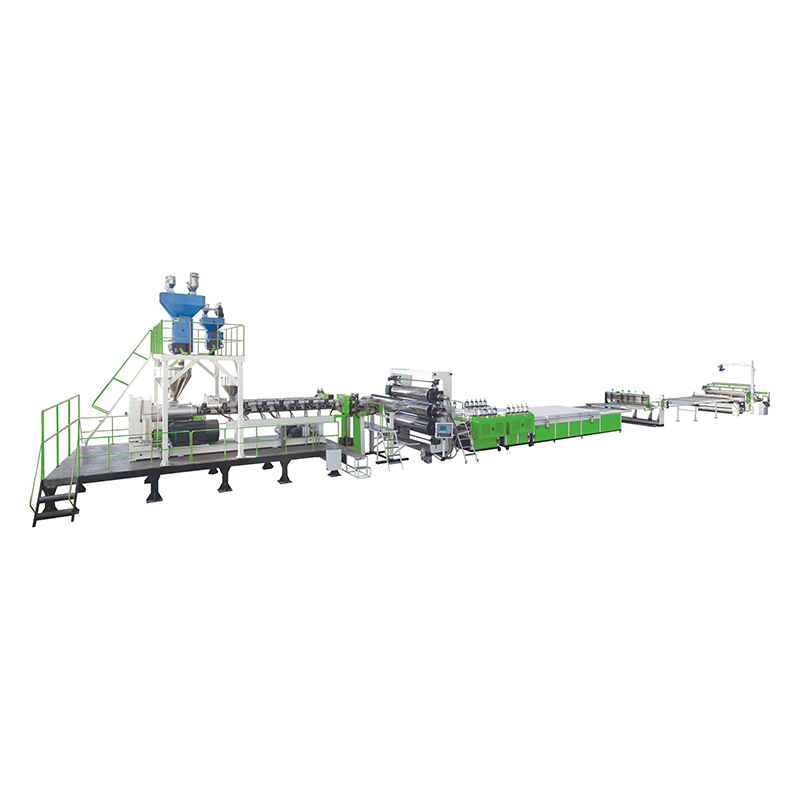
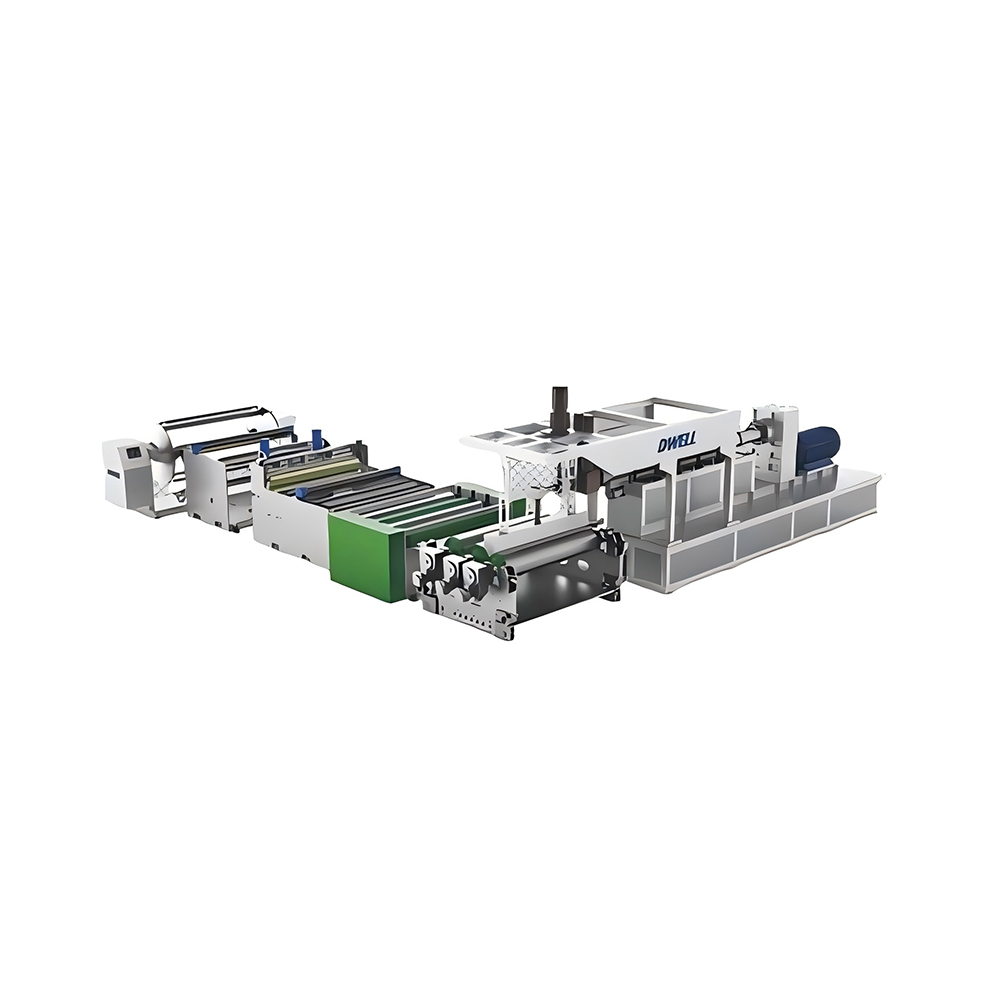
1. Raw material treatment system
Automatic feeder: for transporting PP / PE / PET raw material particles to the extruder.
Drying system: remove raw material moisture to ensure processing quality.
Compching system: accurately mix main materials, additives and color masterparticles.
2. Extrusion system
Single screw / double screw extruder: melt and squeeze raw material according to requirements.
Co-extrusion system: multiple extruder are used together to produce multi-layer structure backplane.
Melt pump: Provide a stable melt pressure to ensure extrusion uniformity.
Net changer: filter impurities to ensure melt purity.
3. Distribution and co-extrusion mold head
Distribution module: proportional different melts to the die.
Co-extrusion mold head: integrate the multi-layer melt to form a uniform multi-layer plate structure.
4. Extension and cooling system
Calendering roll set: form smooth multi-layer sheet.
Cooling roller set: rapid cooling molding, improve the dimensional stability of the plate.
Edge trimming device: remove excess to ensure the width of the finished product.
5. Surface treatment system
Surface coating equipment: Add a protective layer or a functional coating (such as a UV barrier layer) as required.
Electrostatic treatment device: remove the surface static electricity, improve the printing or coating effect.
6. Traction and cutting system
Traction device: synchronous traction plate to ensure smooth delivery.
Cutting equipment: cut the finished plate according to the set specifications.
7. Automatic control system
PLC control system: realize fully automated operation of the production line, monitoring temperature, pressure, speed and other key parameters.
Touch screen interface: man-machine interaction, easy to real-time adjustment of process parameters.
8. Auxiliary equipment
Wder / stacker: fold or stack the finished plate neatly.
Waste recycling system: recycle edge cutting materials to improve the utilization rate of materials.
Extrusion advantages and features:
1. Excellent material properties
Strong weather resistance: the photovoltaic backplane has excellent ultraviolet resistance, high temperature resistance, heat resistance, to ensure long-term use.
High mechanical strength: the multi-layer structure design gives the plate excellent tensile strength and tearing strength to meet the protection needs of photovoltaic modules.
Excellent insulation: the backplane has high electrical insulation, providing safety protection for photovoltaic modules.Chemical stability: acid and alkali corrosion resistance, not easy to degradation or aging.
2. High production efficiency
Multi-layer co-extrusion technology: realize one-time molding of multifunctional materials, reduce processing steps and improve production efficiency.
High-precision automatic control: the PLC system ensures accurate control of temperature, pressure, thickness and other parameters to improve production stability.
Strong continuous production capacity: the equipment is suitable for mass production, to meet the demand of the photovoltaic industry for high yield.
3. Excellent cost control
High material utilization rate: the co-extrusion process can flexibly use functional additives or fillers to improve the economy.
Waste recycling system: effective recovery of edge cutting and residual materials, reduce the production cost.
Energy efficiency optimization: equipment energy-saving design to reduce energy consumption and reduce operating costs.
4. Flexible product design
Multilayer structure can be customizable:
Surface layer: weather-resistant UV layer.
Intermediate layer: high-strength substrate layer (such as PP, PET).
Back layer: moisture-proof layer or functional layer.
The backplane thickness, color and function attributes can be adjusted according to customer needs to meet the diversified market demand.
5. Environmental protection and sustainability
Recyclable materials applications: support the use of environmentally friendly materials (such as recycled PET), in line with the development trend of green energy industry.
Low-carbon emissions: Adopt an optimized process and energy-saving design to reduce the carbon footprint.Solvent-free process: to reduce the pollution to the environment and meet the environmental protection standards.
6. Adapt to the development needs of the photovoltaic industry
Compatibility: The backplane produced is suitable for crystalline silicon modules, thin film modules and flexible photovoltaic modules.
Durability guarantee: to meet the performance requirements of photovoltaic modules in the life cycle of more than 20 years.
High added value: enhance the competitiveness of the products in functional design (such as moisture-proof and anti-reflection) in the market.
application area:
1. Crystal silicon photovoltaic modules
As an important protective material for crystalline silicon photovoltaic modules, the backplane has excellent weather resistance, insulation and moisture and heat resistance, ensuring the long-term stable operation of the modules.
Suitable for monocrystalline silicon and polycrystalline silicon photovoltaic modules.
2. Thin-film photovoltaic modules
Thin-film photovoltaic modules require high flexibility and sealing performance of the backplane, and the PP / PE / PET multi-layer backplane can meet its needs through customized design.
Provide lightweight and weathering solutions.
3. Flexible photovoltaic modules
Flexible photovoltaic modules are often used in building integration (BIPV) or portable photovoltaic equipment, and the backplane needs to have good flexibility and lightweight characteristics.
The back plate of PET substrate has good bending and processing, and is very suitable for flexible components.
4. Agriculture and water photovoltaic
For agricultural photovoltaic facilities (such as agricultural and optical complementary systems), the backplane needs long-term high humidity environment resistance.
Floating photovoltaic on the water has high requirements for the moisture resistance and UV resistance of the backplane, and the backplane produced by this production line can meet these harsh conditions.
5. Energy storage and off-grid system
In energy storage photovoltaic systems and off-grid photovoltaic applications, the modules should be exposed to harsh environments for a long time, and the backplane material should have high durability and chemical corrosion resistance.
The PP / PE / PET backplane provides stable protection and insulation functions.
6. Photovoltaic Building Integration (BIPV)
The backplane in the BIPV field needs to be combined with excellent aesthetics, lightweight and durability. The PET substrate can achieve diversified appearance and performance through coating or co-extrusion.
Suitable for photovoltaic curtain wall, lighting roof, building roof and other application scenarios.
7. Portable photovoltaic products
Used for mobile power supply, outdoor photovoltaic charging equipment and other small photovoltaic products, the backplane needs to be light, durable and with good processing.
Thin-type design can be adapted to meet the needs of portable equipment.
8. Environmental special scene photovoltaic
High salt fog environment: such as offshore photovoltaic power station, the backplane salt spray resistance and corrosion resistance performance requirements are extremely high.
High humidity environment: such as photovoltaic systems in tropical areas, the moisture-proof performance of the backplane is the key.
9. Maintenance and upgrading of photovoltaic modules
The backplane is also suitable for the maintenance or renewal of old components, improving component life and efficiency by replacing the high-performance backplane.