Skip to content


PS Plastic Sheet Extrusion Line
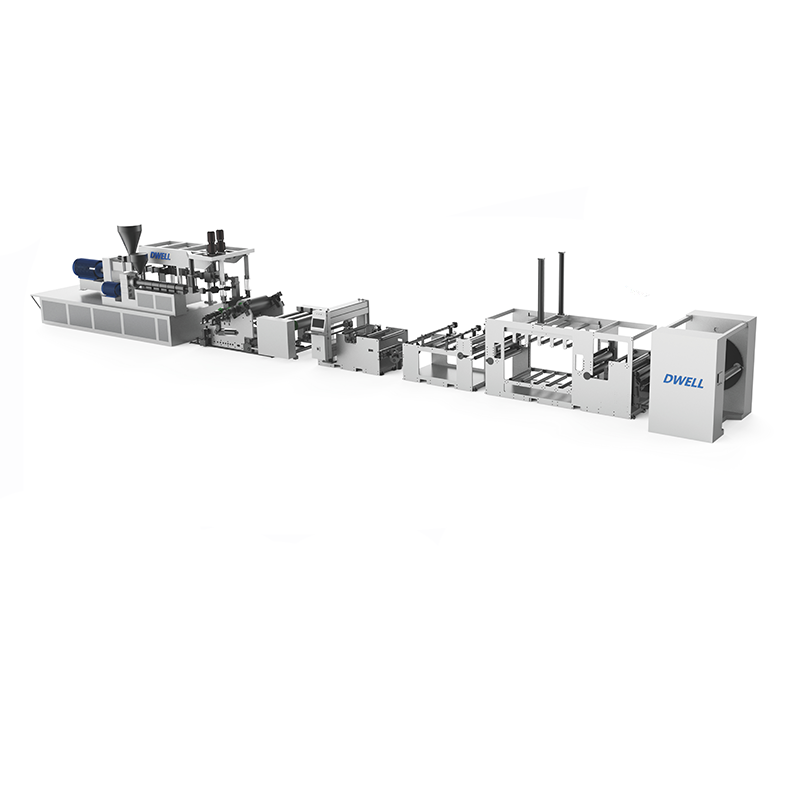
PS Plastic Sheet Extrusion Line is a very efficient and secure expert production system, especially designed for the mass production of polystyrene sheets. This manufacturing line integrates streamlined extrusion technology, accurate temperature control, and a quick shaping and cooling system. It can stably produce sheets with uniform thickness and a smooth surface, suitable for General Purpose Polystyrene( GPPS) and High Impact Polystyrene( HIPS). It is commonly used in food packaging, everyday consumer goods, stationery, commercial liners, and other fields. Its core design emphasizes outstanding cost-effectiveness, easy operation and maintenance, and dependable continuous production capability, making it an ideal solution to satisfy the market demand for large-scale PS sheet production.
This manufacturing line is tailor-made for the handling characteristics of PS materials. Every action, from raw materials handling to finished item winding, is designed to attain the production goals of great speed, stability, and energy efficiency.
Core Technical Features
- Effective Extrusion System: Utilizes a deep-flighted, high-conveyance-efficiency steady compression lock design optimized for the great fluidity of PS melt. This ensures secure feeding and standard plastification during high-speed extrusion. The barrel is equipped with multiple independently and precisely controlled temperature zones (air-cooled/water-cooled), accurately matching the PS processing temperature profile to prevent overheating degradation and maintain melt quality.
- Rapid Molding and Cooling System: Features a common coat-hanger type wide-slot straight kill with a smooth stream channel design for standard output, adapting to the quick molding process requirements of PS sheets. The three-roll schedule employs a large-diameter design, providing sufficient cooling and measurement contact area. Individually controlled roll temperatures rapidly impart good dimensional stability and area gloss to the sheets. A multi-section wheel and air-knife assisted cooling program ensures the linens are completely and equally cooled to room temperature under high-speed haul-off, preventing following shrinkage and displacement.
- Secure Drive and Haul-off: Important drive positions use AC adjustable frequency drives or servo systems for secure speed synchronization. This ensures matched rate chains from extruder, calendering, to haul-off, guaranteeing continuous sheet tension and constant thickness. Heavy-duty haul-off roller provides adequate gripping force to prevent slipping during high-speed creation.
- User-Friendly Control System: Features centralized PLC control coupled with a large-sized Human-Machine Interface( HMI) for intuitive display and adjustment of all line process parameters (temperature, speed, pressure, etc.). It includes problem concern, data logging, and dish storage functions, simplifying procedures and facilitating production management.
Goods Application Range
The PS sheets produced by this line function as essential packaging and production materials for several industries:
- Food Packaging Industry: Foundation sheets for thermoformed products like disposable food boxes, mug lids, yogurt cups, fruit trays, and bread trays.
- Daily Consumer Goods: Stationery( binders, desk pads), toy components, home appliance liners, decorative panels.
- Industrial& Commercial Packaging: Hardware tool packaging inserts, aesthetic backing boards, and industrial display stands.
- Specific Printing and More Processing: As a stamping substrate for making marketing boards, screen-printed signs, etc.
Frequently Asked Questions( FAQ)
Q1: May this manufacturing line produce both GPPS and HIPS? What changes are needed?
A1: Yes. The running temperature of GPPS and HIPS is related. When switching materials, adjustments primarily involve the heat zones of the extrusion (typically significantly lower for HIPS), calender roll temperatures, and probably haul-off speed. The manufacturing line control system’s formula store function makes this switching very easy.
Q2: What causes warping or unequal thickness in the produced linens?
A2: Frequent reasons include:
- Uneven Temperature: Examine if temperatures are consistent across all points of the kill and calendar rolls.
- Insufficient or Uneven Cooling: Examine if the cooling system is functioning correctly. The heating costs on both sides of the strip should be as asymmetric as possible.
- Unstable Haul-off Tension: Test the parallel, pressure, and speed syncing of the haul-off rollers.
- Raw Material Issues: High moisture content or significant Melt Flow Index( MFI) fluctuations in the raw material can also affect stability. Ensure the fresh material is completely dried and consistent between batches.
Q3: How fast can the manufacturing rate be? How is excellent ensured at high speeds?
A3: Creation speed depends on strip thickness and width. For thin sheets( e. g., 0.3mm-0.5mm), line speed can reach 15-25 meters per minute or even higher. Important factors for ensuring value at higher speeds are:① The extrusion screw’s secure expressing and plastification capability,② Standard output from the die,③ The fast and consistent heat exchange efficiency of the calendering and cooling system,④ Precise speed synchronization control of the entire drive system.
Q4: What about products’ energy consumption and upkeep?
A4: This collection uses high-efficiency actuators and streamlined heating/cooling designs, making it more energy-efficient than standard equipment. Routine maintenance largely includes regular washing of the kill and schedule rolls, inspecting and lubricating transmitting parts, and replacing filter screens. We provide detailed maintenance manuals and training so that customers may perform routine maintenance separately.
Q5: What after-sales solutions do you provide?
A5: We provide a complete “turnkey “service.
- On-site Installation& Commissioning: Engineers guide the installation until steady production of competent products is achieved.
- Operation& Maintenance Training: Provide comprehensive training for the customer’s team.
- Long-term Technical Support: Offer rural online support and quick on-site support response.
- Spare Parts Supply: Ensure a long-term and steady supply of authentic spare parts.