 Skip to content

In today’s fast-paced manufacturing industry, efficiency and precision are essential. One of the key innovations that have revolutionized production is the use of automatic thermoforming equipment. This machinery has become a staple in many industries, including food packaging, automotive, medical, and consumer goods. In this article, we will explore the five key benefits of using automatic thermoforming equipment and how it enhances productivity and quality in various manufacturing processes.
What is Automatic Thermoforming Equipment?
It refers to machines that mold plastic materials by heating them to a pliable state and then forming them into specific shapes using molds. This process can be done through various methods such as vacuum forming, pressure forming, and twin-sheet forming. The equipment is designed to automate the entire process, ensuring high efficiency and precision.
Unlike manual thermoforming, which requires human intervention, automatic thermoforming equipment allows for continuous production with minimal operator involvement. This not only increases production rates but also ensures consistent product quality.
Key Components of Automatic Thermoforming Equipment
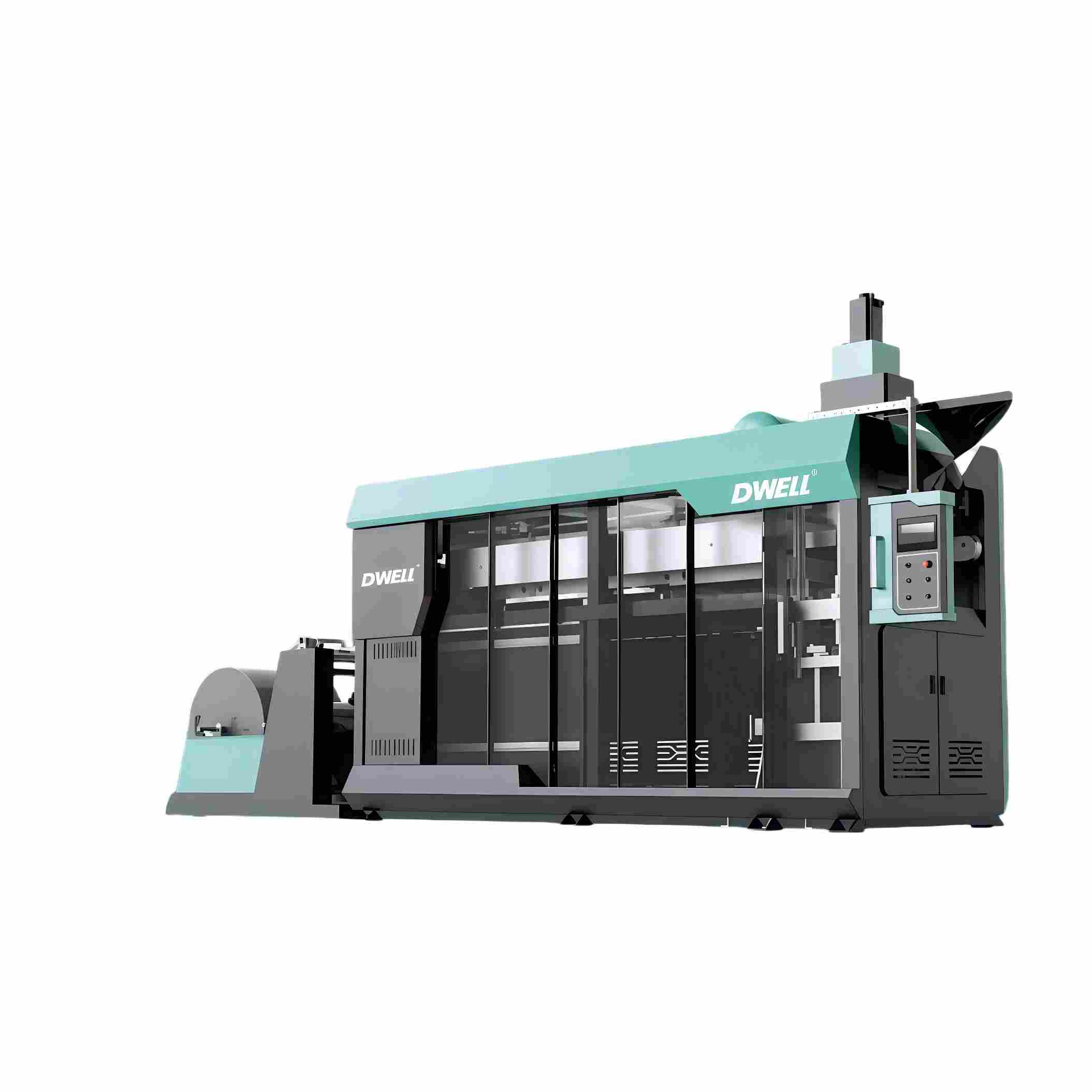
They typically includes several key components, such as:
- Heating section: This part of the equipment heats the plastic sheets to a specified temperature.
- Forming station: The heated plastic sheet is formed into the desired shape using molds.
- Cooling station: Once formed, the plastic is cooled to maintain its shape.
- Cutting station: After the forming process, the excess material is trimmed or cut to size.
- Control panel: The control panel allows operators to set parameters such as temperature, time, and mold pressure.
The main benefits of using automatic thermoforming equipment:
1. Increased Production Efficiency
One of the primary advantages of automatic thermoforming equipment is its ability to significantly increase production efficiency. Traditional thermoforming methods require manual labor for each stage of the process, from heating the plastic sheets to cutting them into shape. However, automatic machines can handle the entire process without human intervention.
This automation leads to faster cycle times, reducing the time required to produce each piece. As a result, manufacturers can produce large volumes of products in a shorter amount of time. For high-demand industries like food packaging or automotive manufacturing, this increased efficiency is critical for staying competitive.
How Automatic Thermoforming Improves Efficiency:
- Faster cycle times: Automatic machines are programmed to operate faster than manual processes, resulting in a higher output.
- Continuous production: Once the machine is set up, it can run continuously with minimal downtime, unlike manual methods that often require breaks or adjustments.
- Reduced labor costs: With automation, fewer workers are needed for the production process, leading to significant cost savings in labor.

2. Consistent Quality and Precision
Another key benefit of using automatic thermoforming equipment is the ability to maintain consistent product quality and precision. Since the process is automated, the equipment can be programmed to replicate the same conditions for each cycle, ensuring that every product produced meets the same quality standards.
Automatic thermoforming machines can also perform intricate and complex molding tasks that would be challenging or impossible to achieve manually. This results in precise shapes, uniform thickness, and accurate dimensions, which are especially important in industries like medical device manufacturing and packaging.
How Automatic Thermoforming Ensures Consistency:
- Repeatability: Automated systems can repeat the same process with minimal variation, leading to uniform products.
- Tighter tolerances: The equipment can be fine-tuned for precise control over every aspect of the process, such as temperature, pressure, and molding time.
- Fewer human errors: Automation minimizes the chances of errors caused by operator fatigue or inconsistency, leading to more reliable production.
3. Enhanced Product Versatility
Automatic thermoforming equipment allows manufacturers to create a wide range of products from different types of thermoplastic materials. This versatility is a significant advantage, as it enables companies to produce various items for different industries, all using the same equipment.
Whether you’re producing food containers, medical trays, automotive parts, or consumer products, they can be easily adapted to different materials and designs. The ability to quickly change molds and settings makes it easier for manufacturers to diversify their product offerings without investing in new machines for each product line.
Benefits of Enhanced Product Versatility:
- Material flexibility: Automatic thermoforming equipment can process a variety of thermoplastics, such as PVC, PET, and polystyrene.
- Multiple product types: Manufacturers can produce different shapes, sizes, and designs using the same machine, increasing their ability to serve diverse markets.
- Easy mold changes: With automated systems, mold changes can be done quickly and efficiently, reducing downtime between product runs.
4. Cost Savings and Reduced Waste
The automation of the thermoforming process leads to significant cost savings and reduced waste in the production process. Since the equipment is highly efficient, it minimizes the amount of material wasted during production, which can be a major concern in manual processes.
They also reduces the need for labor and human intervention, further driving down costs. Additionally, the precision of the equipment means that products are more likely to meet specifications, reducing the likelihood of defects or rework.
How Automatic Thermoforming Reduces Costs:
- Lower labor costs: Automated systems reduce the need for manual labor, allowing businesses to operate with fewer workers.
- Minimized material waste: Automatic thermoforming equipment uses precise measurements, ensuring that materials are used efficiently.
- Higher yield rates: The increased precision and consistency of automatic systems lead to fewer defective products, which means less rework and scrap.
5. Improved Safety and Workplace Environment
Safety is always a top priority in any manufacturing environment. Automatic thermoforming equipment contributes to a safer workplace by reducing the amount of manual labor required and minimizing the risks associated with human error.
With automatic systems handling the most dangerous tasks, such as handling heated plastic and cutting, workers are less exposed to hazardous conditions. Additionally, many modern thermoforming machines come with safety features such as emergency stop buttons, safety shields, and automatic shutdown mechanisms, ensuring that operators are protected.
How Automatic Thermoforming Enhances Safety:
- Reduced operator exposure: Automation takes over potentially hazardous tasks, reducing the risk of burns, cuts, and other injuries.
- Safety features: Many machines are designed with built-in safety systems that automatically shut down in case of a malfunction or emergency.
- Cleaner work environment: Automation reduces the need for constant human interaction with the equipment, leading to a cleaner and more organized workplace.
Conclusion
In conclusion, automatic thermoforming equipment offers numerous benefits that can significantly improve manufacturing processes across various industries. From increased production efficiency and consistent quality to cost savings and improved workplace safety, these machines provide a valuable solution for businesses looking to stay competitive in the modern manufacturing landscape.
As industries continue to demand faster, more efficient production methods, investing in automatic thermoforming equipment is a smart decision for manufacturers looking to enhance their operations and produce high-quality products at scale.
