 Skip to content


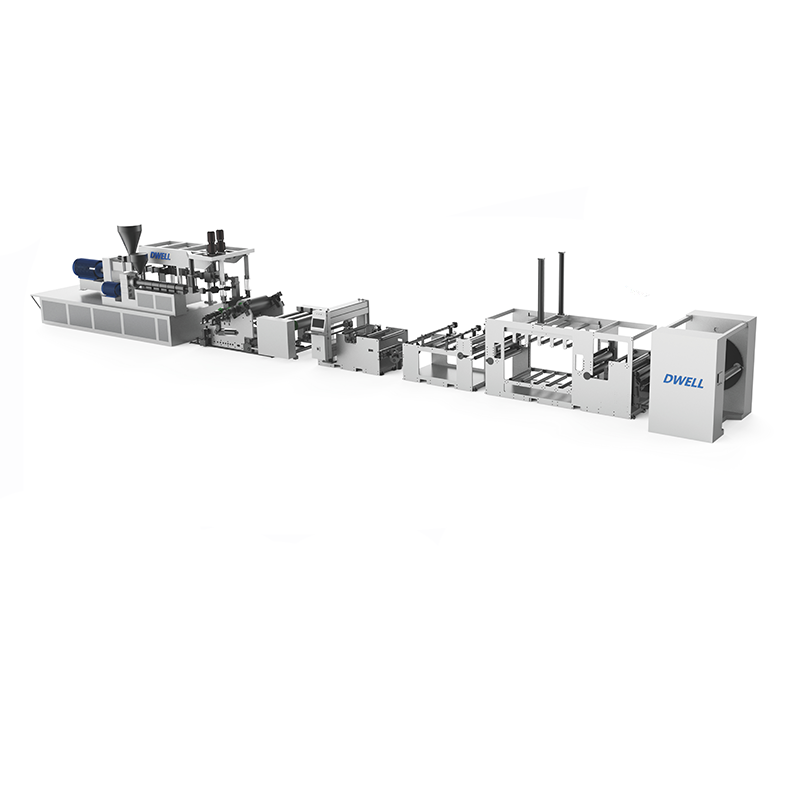
In the quick-evolving packaging industry, efficiency, precision, and sustainability have become necessary, instead of being competitive. As the global consumption of disposable beverages continues to increase, this is primarily caused by coffee shops, bubble tea chains, fast food restaurants, and convenience stores. These entities have led the way in producing large quantities of beverages at a consistent quality level while also controlling costs and energy consumption.
Against this background, Full Servo Cup Thermoforming Machines have become a significant technology that will influence the future of manufacturing cups. By switching to a fully servodriven motion control system for the hydraulics and the pneumatic system, these machines are making the transition from a mechanically-bound process to a highly intelligent, data-based manufacturing solution.
Why Full Servo Cup Thermoforming Machines Are Redefining Cup Manufacturing
For centuries, the process of cup thermoforming was primarily dependent on hydraulic pressure and air-powered systems. While beneficial, these technologies have inherent flaws: erratic motion caused by temperature-sensitive oil, high consumption of energy, mechanical wear, noise, and complex maintenance issues.
Full Servo Cup Thermoforming Machines are significant in terms of breaking away from these limitations. Every significant motion—sheet feeding, plug-assisted creation, mold opening and closing, cutting, and stacking—is facilitated by independent motors. These motors have feedback that is real-time based on encoders; this ensures that the position is accurate, the acceleration is smooth, and that the motion is repeatable.
As such, manufacturers have attained unprecedented control over the speed, accuracy, and stability of their processes, which are all factors that are important in meeting today’s stringent production standards.
What Are Full Servo Cup Thermoforming Machines?
At the core, Full Servo Cup Thermoforming Machines are advanced thermoforming devices that utilize servo motors to replace hydraulic cylinders and pneumatic actuators in all primary functions.
Thermoforming is already a well-documented process: a thermoplastic sheet is heated to a state that is easily formed, it is then formed over a mold using pressure or vacuum, and the sheet is then cooled and trimmed into finished products. What sets off the difference between full servo technology is the exactness and intelligence of each step.
Servo motors do not simply rotate continuously like conventional motors. They can start, stop, hold position, and move to exact coordinates with extremely high repeatability. In cup production, this means:
-
Accurate sheet indexing without slippage
-
Controlled plug assist motion for uniform wall thickness
-
Stable mold closing and cutting force
-
Gentle yet high-speed stacking of finished cups
This level of control allows Full Servo Cup Thermoforming Machines to produce millions of identical cups with minimal variation, even during extended multi-shift operation.

How Full Servo Cup Thermoforming Machines Work
Servo-Controlled Sheet Feeding
Material feeding is the foundation of the thermoforming process. In Full Servo Cup Thermoforming Machines, sheet transportation is typically handled by servo-driven grippers or chain conveyors. Unlike pneumatic systems that can jerk or lose alignment, servo feeding ensures smooth, linear motion with precise positioning.
This accuracy is especially critical for multi-cavity molds and wide forming areas, where even slight misalignment can lead to mold damage or cutting errors.
Advanced Servo Plug Assist Forming
Deep-draw cups require precise material distribution to maintain strength without excessive thickness. Servo-driven plug assist systems allow manufacturers to program multiple speed zones during plug movement. The plug can descend rapidly to prevent premature cooling, then slow down at the point of contact to guide material evenly into the mold cavity.
This programmable motion is one of the key reasons Full Servo Cup Thermoforming Machines excel at producing deep, lightweight cups with consistent wall thickness.
Servo Mold Closing and Cutting
Modern Full Servo Cup Thermoforming Machines often feature robust four-column structures made from tempered 40Cr steel with hard chrome plating. This design provides exceptional rigidity, precise alignment, and outstanding wear resistance, extending mold life and maintaining cutting accuracy over time.
Mold opening and closing are typically driven by a high-power servo motor through a five-point linkage mechanism. Compared to hydraulic punching systems, this configuration delivers stable cutting force, low noise, clean operation, and improved hygiene—essential for food-grade packaging.
Servo-Driven Stacking Systems
Stacking is frequently a bottleneck in traditional thermoforming lines. Servo-driven stacking units in Full Servo Cup Thermoforming Machines synchronize perfectly with the forming cycle, allowing finished cups to be stacked quickly and gently without deformation or tipping. The result is clean, uniform stacks ready for downstream packaging.
Core Advantages of Full Servo Cup Thermoforming Machines
High-Speed Production Without Compromise
Speed is a decisive factor in disposable cup manufacturing. Because each axis in Full Servo Cup Thermoforming Machines operates independently, multiple movements can occur simultaneously. While one station forms cups, another prepares for cutting or stacking, dramatically reducing idle time.
In practice, this parallel processing capability allows cycle times that are typically 20–30% faster than conventional hydraulic machines, with output ranging from 45 to over 100 cups per mold per minute, depending on cup size and design.
Exceptional Precision and Consistency
Hydraulic systems are sensitive to oil temperature and pressure fluctuations, which can lead to inconsistent forming results. Servo systems, by contrast, maintain stable performance regardless of environmental conditions.
Full Servo Cup Thermoforming Machines routinely achieve positional accuracy within ±0.01 mm, ensuring uniform wall thickness, clean cutting edges, and perfectly formed rims—critical for reliable lid sealing and brand consistency.
Significant Energy Savings
Energy efficiency is one of the strongest economic arguments for adopting Full Servo Cup Thermoforming Machines. Hydraulic systems require pumps to run continuously, consuming power even during idle periods.
Servo motors operate on a demand-only basis, drawing power only when movement is required. When holding a position, energy consumption drops close to zero. In real-world applications, manufacturers often report overall energy reductions of 30–50% compared to hydraulic machines.
Material Optimization and Waste Reduction
Precise control over forming pressure and plug motion allows Full Servo Cup Thermoforming Machines to produce thinner-walled cups without sacrificing strength. In addition, servo-controlled sheet feeding enables tighter nesting of cup cavities, reducing skeleton waste.
Even a modest 5–10% reduction in scrap can translate into substantial material cost savings when processing hundreds of tons of plastic annually.
Applications of Full Servo Cup Thermoforming Machines
Thanks to their flexibility and efficiency, Full Servo Cup Thermoforming Machines are widely used across multiple industries:
-
Beverage cup production for bubble tea shops, cafés, and juice bars
-
Fast-food and quick-service restaurant packaging
-
Convenience store drink systems
-
Food packaging and takeaway container manufacturing
Typical cup sizes range from 6 oz to 32 oz, with rapid changeover capabilities allowing manufacturers to switch products quickly to meet fluctuating demand.
From Traditional Plastics to Biodegradable Solutions
Modern packaging demands versatility. Full Servo Cup Thermoforming Machines are well-suited to a wide range of materials:
-
PS (Polystyrene): Ideal for clear cold drink cups and dairy containers
-
PP (Polypropylene): Preferred for hot beverage cups due to heat resistance
-
PET: Used for premium, crystal-clear packaging
-
PLA and biodegradable materials: Increasingly important for sustainable packaging initiatives
Servo-controlled motion is particularly beneficial for processing PLA, which requires gentle handling due to its lower melting point and brittleness.
Economic Value and ROI of Full Servo Cup Thermoforming Machines
Although Full Servo Cup Thermoforming Machines require a higher initial investment, the return on investment is typically rapid. Energy savings, reduced material waste, lower labor requirements, and improved uptime often result in payback periods of 12–24 months.
Beyond direct cost savings, these machines enable manufacturers to compete for high-volume contracts with strict quality requirements and to enter premium packaging markets with higher profit margins.
Transitioning to Full Servo Cup Thermoforming Machines does involve challenges. Higher upfront costs, the need for trained technical personnel, and reliance on specialized spare parts must be carefully considered. Selecting a reliable equipment supplier with strong service support is critical to long-term success.
The Strategic Future of Cup Thermoforming
The transition toward Full Servo Cup Thermoforming Machines is not considered a temporary movement: it’s a strategic progression that is motivated by efficiency, sustainability, and precision. As the cost of energy increases and the standards for quality decrease, servo-driven technology gives manufacturers the necessary tools to remain competitive in a demanding global market.
By combining intelligent motion control, advanced heating systems, and mechanical design that isrobust, Full Servo Cup Thermoforming Machines have achieved a new record for the production of cups. For companies that want to keep their operations running smoothly in the future, investing in full servo technology is no longer just a simple upgrade. It’s a significant step towards taking the lead in the packaging industry long-term.
