 Skip to content

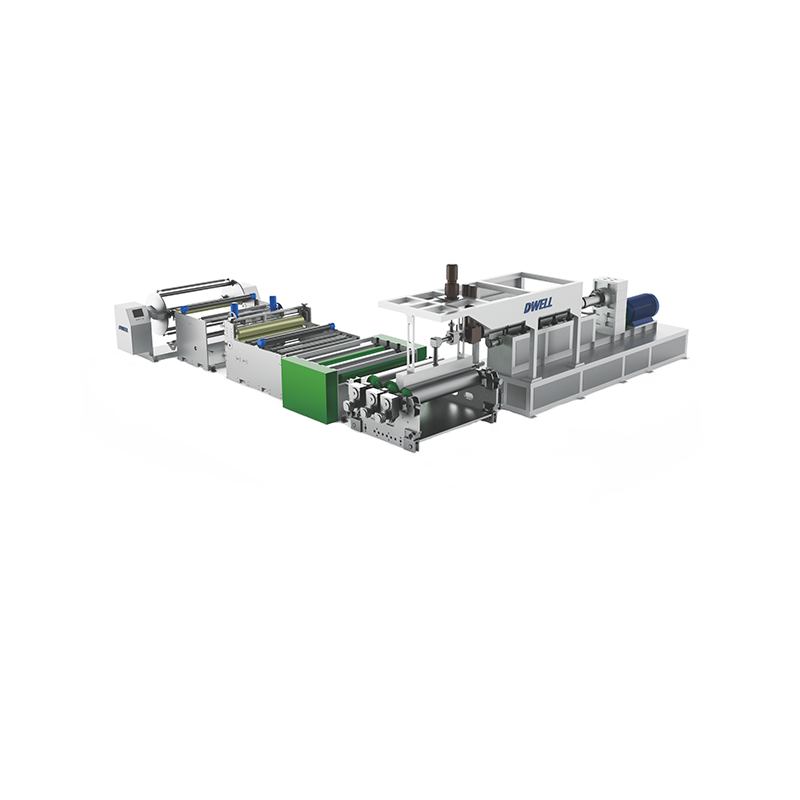

The production of food-grade packaging defines efficiency, hygiene, and material performance as pillars that make up the value chain. Over the last ten years, steady innovation in extrusion and thermoforming is what has inspired the One-Step Extrusion Molding Machine – an integrated, highly automated system whereby polymer pellets are transformed directly into finished containers through an automated line. Unlike the traditional multi-step process, where separate equipment would be used for extrusion, sheet cutting, and thermoforming (three or more machines working completely independently from one another), this system includes them all under one roof and brings seamless production flow plus major cost savings to the table.
The One-Step Extrusion Molding Machine integrates multi-forming technologies into one process. Extrusion, molding, punching, and stacking are realized in one continuous line so that manufacturers can realize high-precision and low-cost production of PP food containers and biodegradable packaging.
From Pellets to Containers: How the One-Step Process Works
In plastic forming by traditional means, work would normally be carried out at several different stations—extrusion to make the sheet, cutting for trimming to size, heating for softening, and thermoforming into containers. This requires separate machines, operators, and energy cycles for each step. The one-step extrusion molding concept reimagines this process as a continuous closed-loop system.
It is at the core of the system where melting and homogenization of the polymer material take place. Among the raw materials fed, in granular form, into the hopper are polypropylene (PP) and composite formulations of PP plus calcium carbonate (CaCO₃), and corn starch-based biodegradable compounds. A special design vented screw running inside the barrel performs three functions simultaneously: plasticizing, devolatilizing, and mixing. A precise temperature gradient is maintained by controlled heating zones from 180°C at the feeding up to about 220°C near the die, which allows a complete melting process without thermal degradation.
The melted matter then moves over a many-layer co-extrusion die head that can take three to five extruders based on the setup. This allows for making single or multi-layer sheets with different useful layers — for example, a middle layer of PP with mineral filler for strength, placed between outside layers of pure PP for food contact safety. Right after the sheet comes out of the die, it goes into a heat-controlled calender roll stack where the thickness and surface finish are set exactly.
Rather than being wound into rolls as happens with conventional systems, the sheet goes straight to the forming station. Matched molds and two vacuums shape it while still hot into lunch boxes, trays, or bowls. An integrated punching and stacking module automatically trims off the scrap and stacks the containers ready for packaging. The whole process—from raw pellets to finished containers—takes just minutes, completely automatic and without any possibility of contamination.
Key Components and Technical Architecture
Each part of the One-Step Extrusion Molding Machine has been made with sync and steadiness in mind. While different models vary in size and setup, the basic structure stays the same across all new systems.
The extruder is powered by a motor with very high torque and uses a screw that is hardened, nitrided-made. It is essentially defined by compression ratio and vent depth, accounting for system compatibility relative to different filler ratios plus biodegradable additives. The automatic controller for the machine tracks the melt pressure as well as temperature conditions via sensors and accordingly regulates the speed of the screw as well as back pressure to keep the stability of achieving optimal homogeneity of the melt.
The die system critically determines product quality. Internal flow channels are optimized by means of computer-aided rheological simulations so that there is an even distribution of the melt. For PP and PP+CaCO₃ materials, it is extremely important to provide a uniform shear distribution across the width to avoid warping as well as thickness deviation in the final sheet. The die lip comes with fine-tuning bolts that can be adjusted dynamically during production to set the thickness of the sheet.
After extrusion, cooling and forming would take place. Calendar rolls are made either of high-chrome steel or an alloy that is mirror-finished, and they are temperature-controlled by circulating oil systems within ±1°C at the surface. Such control would give optical clarity as well as mechanical consistency to the sheet. Then forming section has to make use of servo-driven platens together with high-response vacuum valves to be able to attain high-definition forming at cycle speeds going beyond 5,000 to 10,000 containers per hour.
Material Flexibility: PP, Fillers, and Biodegradables
The most valuable attribute of the one-step extrusion molding machine is material diversity. Flexibility permits manufacturers to run both traditional resins, which are petroleum-based, and eco-friendly biodegradable formulations without any change in the core machinery.
Polypropylene (PP) continues to be the most popular because it is an FDA-compliant material, has good heat resistance, and can be recycled. To optimize cost and increase stiffness, high-quality calcium carbonate (normally 40-60%) is added. The machine’s vented screw design ensures that these types of filler-loaded compounds are well dispersed without loss in tensile strength and impact performance.
In reaction to the worldwide sustainability fashion, several manufacturers are already using corn starch + PP hybrid fabric or maybe absolutely biodegradable starch-based compounds. Quite these bio-resins offer a sustainable choice even as they hold processability within similar temperature ranges (about 180–210°C). Because starch-based materials become sensitive to both moisture and shear, this single-step layout minimizes handling and publicity; consequently danger of degradation is minimized.
This versatility allows the same production line to run both regular PP containers and green degradable packaging. This is, in fact, a huge benefit for packaging manufacturers who serve the regular market as well as the eco-friendly market.

Engineering Advantages Over Conventional Multi-Step Systems
It supersedes the traditional extrusion and forming process by offering a number of engineering and economic advantages. The speed advantage goes along and beyond with product quality, energy efficacy, and operational reliability.
1. Reduced Material Handling and Contamination
No manual sheet transfer and rewinding is involved in integrated designs, which accommodate dust contamination as well as mechanical deformation; hence, it suits hygienic compliance in food packaging production while maintaining wall thickness.
2. Energy and Space Efficiency
Because it uses residual heat from extrusion for forming, energy consumption is reduced by up to 25%. Compact footprint — factory space saved. A major consideration for high-throughput facilities.
3. Precision Control and Product Consistency
Centralized control of temperature, pressure, and servo motion repeatable at high speed forms providing excellent dimensional accuracy even for thin-walled containers.
4. Maintenance and Longevity
Single-line integration reduces mechanical coupling errors. Quick-release molds and automatic lubrication systems are modular within the machine, making it much easier to maintain than a multi-station line.
Inside the Control Logic: Automation and Synchronization
Modern single-step extrusion lines run through PLC-based central control systems with HMI touch screens. Major settings that operators can change in real-time include screw speed, die temperature, roll pressure, and timing of the mold. The software incorporates self-diagnostic routines and will warn the user if there is an anomaly present, such as uneven sheet thickness or a vacuum leak or even a temperature imbalance in the mold.
Servo motors and proportional valves are very important in the general synchronization of speeds between extrusion and forming. For instance, if the throughput of the extruder varies due to changes in the viscosity of the resin material, the forming station will automatically adjust its cycle time to accommodate steady feeding of sheet material. This type of coordinated control helps eliminate warping and stretching and trimming wastes.
In some advanced models, manufacturers implement data recording and production analytics modules. Real-time parameters of energy consumption, throughput rate, and reject ratio are recorded to enable predictive maintenance as well as process optimization.
Performance Metrics and Production Capabilities
A standard PP one-step extrusion line typically operates within these performance ranges:
| Parameter | Typical Range |
|---|---|
| Operating Temperature | 180–220°C |
| Output Capacity | 5,000–10,000 containers/hour |
| Sheet Thickness | 0.3–1.5 mm |
| Filler Content | 0–60% CaCO₃ |
| Layers | 3–5 layers (co-extrusion) |
| Mold Changeover Time | 20–40 minutes |
| Power Consumption | 0.25–0.35 kWh per container batch |
The design of the mold cavity and cooling efficiency are major determinants of throughput in the system. With servo-driven mold stations, it is possible to attain cycle times of less than five seconds without any compromise on precision. The systems for air cooling, oil heating, and vacuum forming work perfectly in tandem with each other, resulting in part quality that can be maintained from batch to batch.
Production Scenarios and Application Spectrum
The flexibility of the One-Step Extrusion Molding Machine extends across a broad spectrum of packaging applications. Its ability to form different container types from varied material formulations makes it a valuable investment for medium to large-scale producers.
Below are some typical production scenarios:
-
Disposable food containers for takeaway and quick-service restaurants.
-
Supermarket trays for fresh meat, seafood, and fruit packaging.
-
Pastry boxes and bakery trays require a smooth surface finish and food-safe contact layers.
-
Medical and pharmaceutical trays, produced with cleanroom-level automation.
-
Eco-friendly starch + PP hybrid packaging, targeting markets with green product regulations.
Why the One-Step Extrusion Approach Is Environmentally Relevant
Sustainable plastic processing, apart from the choice of materials, involves energy consumption, waste generation, and the recyclability of the product. These are directly supported by the one-step design. Since this is a multi-stage set-up system, it drastically reduces energy loss between heating and forming, which can be a very large portion of consumption in traditional lines. Reduced transport of semi-finished sheet means less mechanical scrap as well as secondary re-melting.
Also, when making biodegradable or filled PP materials, the exact control of heat stops over-shearing or breaking down by warmth, an important part in keeping the strength of eco-compounds. Makers can thus create boxes that are both strong and good for the environment.
Practical Considerations for Setup and Operation
While the one-step extrusion molding system offers significant benefits, achieving optimal results requires careful process setup. Experienced operators focus on several key parameters:
-
Temperature balance: Keeping the extrusion and mold temperatures synchronized ensures even wall thickness.
-
Vacuum level: Too low and the form definition suffers; too high and it can cause tearing of thin sections.
-
Cooling rate: Rapid cooling preserves clarity for transparent PP products, while slower cooling enhances impact resistance.
-
Material drying: Especially crucial for starch-based or filled composites, where moisture can cause bubbles or delamination.
These operational insights underline that even though automation handles most of the routine control, human expertise in process optimization remains essential for achieving the best balance between throughput, quality, and energy use.
Market Adoption and Competitive Edge
In the past five years, Asia and Europe have seen a swift embrace of the One-Step Extrusion Molding Machines. The machine’s capability to work with both traditional PP and biodegradable material enables producers to adjust their product lines in line with market needs and the latest environmental policies. In China, this type of system has been effectively used by several manufacturers to achieve QS (Quality and Safety) and FDA certifications at a faster pace due to its closed, contamination-free processing environment.
In a competitive environment in which packaging must balance performance, cost, and sustainability, the one-step system offers high-speed, stable production with low operational complexity, leading to decisive advantages. This here is large-volume production that finds its home with supermarket chains and catering industries, as well as green packaging sectors.
Future Outlook: Integration with Smart Manufacturing
The development of one-step extrusion and forming equipment is headed for more digitalization and smart control. In the next series, there will be a provision for AI-assisted process tuning, remote diagnostics, and energy consumption analytics. This will allow predictive adjustments — for instance, die temperatures can be automatically adjusted based on viscosity trends, or forming pressure can be adjusted based on deviation in mold temperature.
Also, as the science of biodegradable polymers goes further, new materials like PLA–starch mixes and changed PBAT blends will widen the match range of these machines. This working together between material creativity and process machine will lead to the future group of green packaging makers.
The One-Step Extrusion Molding Machine presents a synchronization of precision engineering, automation, and sustainability concepts inside the most updated plastic forming technology. It is a system in which extrusion, forming, punching, and stacking are merged into one coordinated process; thus, production lines are reduced to such an extent that high levels of hygiene and consistency can still be imposed. Besides, it works with PP, PP + filler composites, and biodegradable materials, letting manufacturers target different markets with simple changes to their plant machinery.
As the growing demand for green packaging increases, the one-step extrusion process not only becomes a productivity upgrade but also a technological solution compliant with the new world order: sustainability on the road to conscious efficiency in manufacturing. Be it for high-speed production of disposable food trays or biodegradable lunch boxes, this integrated system has established itself as the most advanced forming technology that is readily available and economically viable.
