 Skip to content


In recent years, the global demand for clean energy has accelerated rapidly, and solar photovoltaic (PV) power generation has emerged as one of the most promising solutions. Among the many components that make up a solar panel, the packaging materials play a vital role in determining the panel’s performance and lifespan. Polyolefin Elastomer (POE) film has become a popular encapsulation material for solar modules due to its excellent properties like optical clarity, resistance to UV radiation, and outstanding weatherability. To meet the growing needs of the industry, the POE Film Extrusion Line has been developed as a cutting-edge solution for the efficient and precise production of high-quality POE film.
What Is a POE Film Extrusion Line?
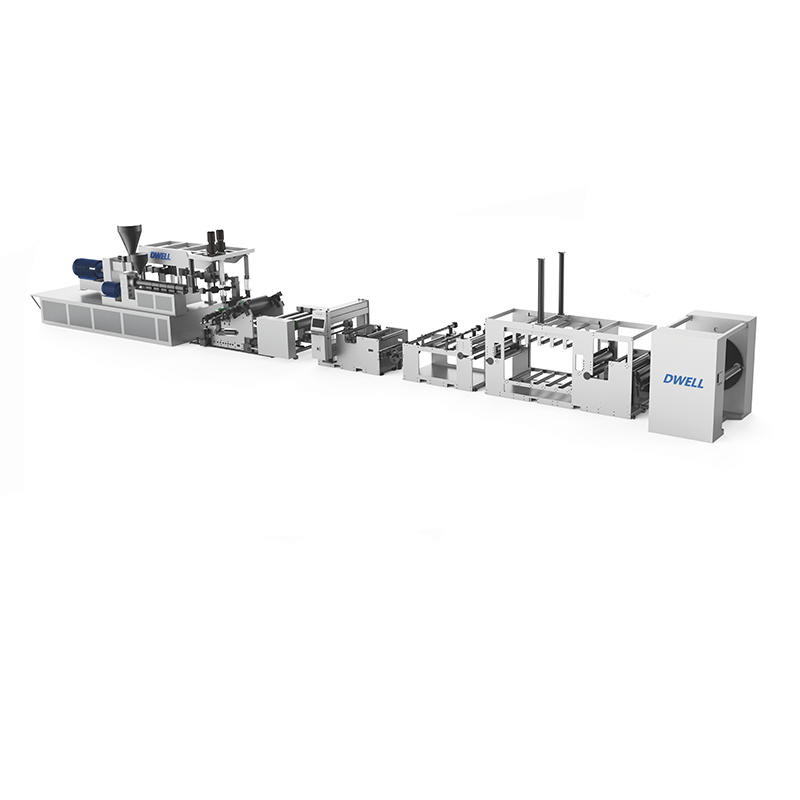
The POE Film Extrusion Line is a specialized industrial production line engineered for the continuous manufacturing of POE films. These films are specifically designed for use in photovoltaic module encapsulation, where they protect solar cells from environmental stressors, improve optical efficiency, and ensure long-term operational reliability. This type of production line consists of several integrated units working in sync to process POE resin into a consistent, high-performance film ready for lamination and assembly into solar panels.
Components of the POE Film Extrusion Line
A modern POE film production line typically includes the following core sections:
1. **Feeding System** – Introduces raw POE resin and additives into the extrusion system. Automatic feeders ensure consistency in the mix and reduce the risk of material deviation.
2. **Extruder** – The heart of the production line. It melts and homogenizes the resin using a screw-barrel system under high temperature and pressure. Twin-screw or single-screw extruders are used depending on production needs.
3. **Melt Filter and Screen Changer** – Removes any unwanted impurities and ensures the melt’s purity before entering the die head.
4. **Flat Die / T-die** – Distributes the molten POE uniformly across the width of the film to ensure even thickness and surface finish.
5. **Casting or Chill Roll Unit** – Rapidly cools the extruded film to lock in its properties. It also defines the initial thickness and smoothness of the film surface.
6. **Edge Trimming System** – Removes excess material at the film edges for a clean and standardized width.
7. **Corona Treatment Unit** – Prepares the surface of the film for better adhesion in later lamination processes.
8. **Tension Control and Traction Unit** – Maintains consistent film tension throughout the process to avoid defects such as wrinkles or stretching.
9. **Winding System** – Rolls the finished film into spools with precision tension and alignment, ready for packaging or secondary processing.

Working Principle of the Extrusion Process
The working principle behind the POE film extrusion line revolves around thermal processing and mechanical shaping. POE resin, usually supplied as granules, is fed into the extruder where it is subjected to controlled heating. The screw within the extruder barrel conveys and melts the material, pushing it forward while homogenizing it with any added UV stabilizers, anti-aging agents, or processing aids.
As the material reaches the die, it is extruded through a slot die into a thin, flat film. This film is then quickly cooled using chill rolls to fix its structure and prevent molecular degradation. Corona treatment enhances surface energy for later lamination. Tension control ensures the film remains consistent in width, thickness, and physical properties. The final product is then wound with high accuracy to preserve film quality.
Advantages of POE Film Extrusion Line
A POE film extrusion line offers numerous advantages, making it the preferred choice for photovoltaic module manufacturers:
– **High Production Efficiency**: Modern extrusion lines are capable of producing thousands of square meters of film per day, dramatically reducing production costs.
– **Consistent Film Quality**: With accurate control systems for temperature, pressure, and extrusion speed, the film produced meets stringent quality requirements.
– **Automation and Intelligence**: Advanced lines are fully automated and integrated with PLC or SCADA systems, enabling real-time monitoring, fault detection, and automatic adjustments.
– **Energy Efficiency**: With optimized heating zones, low-energy motors, and recovery systems, the production line minimizes energy consumption per unit of output.
– **Modularity and Flexibility**: Lines can be customized to produce single-layer or multi-layer POE films depending on the application. Co-extrusion technologies enable the integration of multiple functionalities in one film.
Key Characteristics of POE Film
The POE film itself brings multiple benefits to the photovoltaic industry. Its material properties are specifically engineered to outperform conventional encapsulants such as EVA in several key areas:
1. **Superior UV Resistance**: POE films resist UV-induced degradation, ensuring longer service life in outdoor applications.
2. **PID Resistance**: Potential-Induced Degradation (PID) is a known issue in solar panels. POE effectively mitigates this by acting as an excellent insulator and moisture barrier.
3. **High Optical Clarity**: The film allows maximum light transmission, enhancing the efficiency of solar cells.
4. **Thermal Stability**: It maintains dimensional and mechanical stability across a wide range of temperatures.
5. **Low Water Vapor Transmission Rate**: This prevents moisture ingress that can damage sensitive solar cells.
6. **Non-Toxic and Environmentally Friendly**: POE films do not contain halogens or heavy metals and comply with ROHS and REACH standards.
Application Areas Beyond Photovoltaics
While POE films are predominantly used in the solar energy sector, their beneficial properties have made them attractive across various other industries:
– **Automotive Industry**: Used in lightweight bumpers, sealing parts, and protective films.
– **Construction Sector**: Employed as waterproof membranes, vapor barriers, and insulation films.
– **Agriculture**: Applied as greenhouse films due to excellent UV resistance and flexibility.
– **Medical Applications**: Used in packaging medical instruments and as soft film for dressings.
– **Consumer Electronics**: Utilized in the lamination of display screens, batteries, and protective casings.
Future Outlook and Market Trends
As the global transition to renewable energy accelerates, the demand for durable, high-performance encapsulant materials like POE films is expected to skyrocket. Market studies indicate double-digit CAGR growth for POE films in the next decade, driven primarily by solar module deployment in regions like Asia-Pacific, Europe, and North America.
Manufacturers investing in POE film extrusion lines today are positioning themselves at the forefront of a rapidly expanding green economy. Furthermore, innovations in multilayer film extrusion, inline quality monitoring, and recyclable film production are setting the stage for even higher standards of performance and sustainability.
In the future, we anticipate further integration of artificial intelligence and machine learning into extrusion systems, allowing predictive maintenance, intelligent recipe adjustment, and defect prevention in real-time. These advancements will not only improve profitability but also ensure consistency and minimize waste, making POE film production even more environmentally responsible.
The POE Film Extrusion Line represents a critical enabling technology in the global push toward renewable energy and sustainability. Its ability to produce high-quality, durable, and high-performance encapsulation films has revolutionized the way solar modules are protected and optimized.
With its unmatched advantages in efficiency, precision, and environmental friendliness, the POE film extrusion line is not just a piece of equipment — it is a strategic investment for forward-thinking manufacturers in the photovoltaic and allied industries. As we move toward a cleaner and more sustainable future, technologies like this will play a pivotal role in reshaping how we harness and protect solar energy.
